Crossing the threshold of a home sometimes brings an immediate conviction. A certainty that cannot be reduced to square footage or the number of bedrooms. It is something deeper: the rightness of a proportion, the smoothness of stone under one’s hand, the way light enters through a window in the late afternoon.
As you travel through Provence, your gaze is often caught by noble buildings standing amidst vineyards or in the shade of century-old plane trees. These dwellings seem to have always belonged to the landscape. Yet, their harmony is no accident. At Beaumas, we know that an exceptional house can be read like an open book. To decipher its architecture is to understand its history, to distinguish the essential from the anecdotal, and, ultimately, to grasp its true value.
Here is how to decode these places that are truly one of a kind.
Bastide, Mas, Maison de Maître: Three Destinies of Stone
It is common to confuse these three types of dwellings. However, their origins and souls are fundamentally different.
The Maison de Maître, the Affirmation of Status
The maison de maître (master’s house) is found in the heart of a village or on its edge. It affirms a status: that of the doctor, the notary, or the landowner. With a refined facade facing the street, high ceilings, a monumental staircase, and vaulted cellars, it is a notable’s residence. It seeks neither the discretion of the mas nor the rustic elegance of the bastide. We appreciate these houses for their presence; they structure a village and are often its historical heart.
The Bastide, the Art of Summer Living
The Provençal bastide is not a farm. It is a country house built between the 17th and 19th centuries by the bourgeoisie of Aix or Marseille who wished to escape the urban heat in summer. It is recognized by its symmetry, its génoises—those rows of overlapping tiles crowning the facade like a signature – and its central door framed in stone. The bastide speaks of the “douceur de vivre,” of meals under the plane trees, and of siestas behind closed shutters. It is a place for breathing. At Beaumas, we love bastides for this architectural evidence: everything is designed to slow down time.
The Mas, Land Above All
The mas, by contrast, is a farm. Built for agricultural production – vineyards, olives, cereals, livestock – its architecture is functional, often irregular, and expanded over generations according to need. It is recognized by its volume: vast, austere, and turned away from the Mistral wind. With little decoration and multiple outbuildings, it tells a story of labor, legacy, and attachment to the soil. It does not impress by its facade, but by its solidity and grounding. What we look for in a mas: the quiet strength of a place that has weathered centuries of work.
The Intelligence of Climate and Materials
The beauty of vernacular architecture lies in its response to the natural elements. Every detail has a precise function that we observe with care.
The Génoises, More Than a Detail
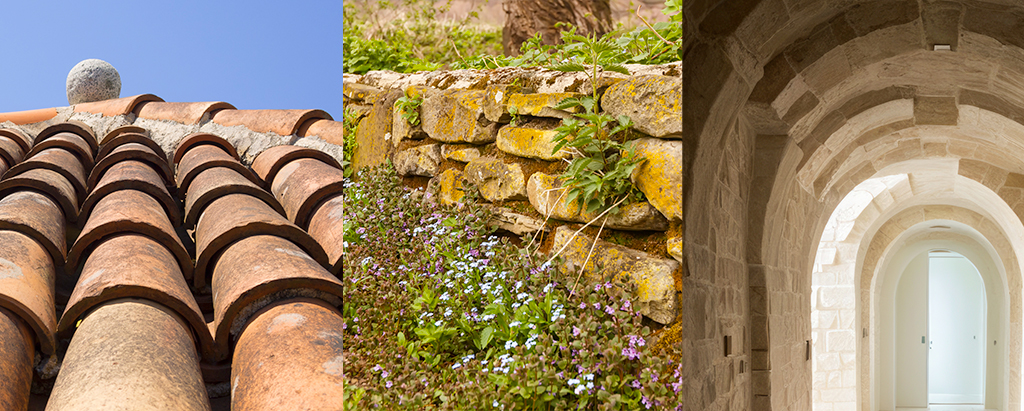
These rows of overlapping tiles under the roofline are not merely decorative folklore. They protect the facade from rainwater. Their number (one row for a modest mas, three or four for a grand bastide) reveals the building’s original ambition and the social status of its builders.
The Vaults, the Coolness of Time
Ground floor rooms in Provence are often vaulted—barrel, groin, or sometimes dome-shaped. Why? Because stone was abundant while wood was scarce. Because vaults withstand time. And above all, because they maintain coolness in summer—a thermal inertia that transforms a house into a sanctuary when the sun is at its peak. A dressed-stone vault is a promise: that of bearable summers without air conditioning.
Lime Plaster, Letting the Walls Breathe
Ancient walls require lime (chaux), a material that protects the stone while allowing it to breathe. It wicks away moisture, absorbs the micro-movements of the structure, and ages with grace. Tinted with natural pigments, this plaster catches the raking light, unlike modern cement which stifles and degrades historic masonry.
The Restanques, Sculpting the Landscape
These agricultural terraces supported by dry-stone walls are not a postcard backdrop. They are the result of titanic labor: retaining soil on slopes, enabling cultivation, and managing water. Around a bastide or a mas, the restanques tell the story of how the landscape was tamed, shaped, and passed down.
The Trees, Planted Witnesses
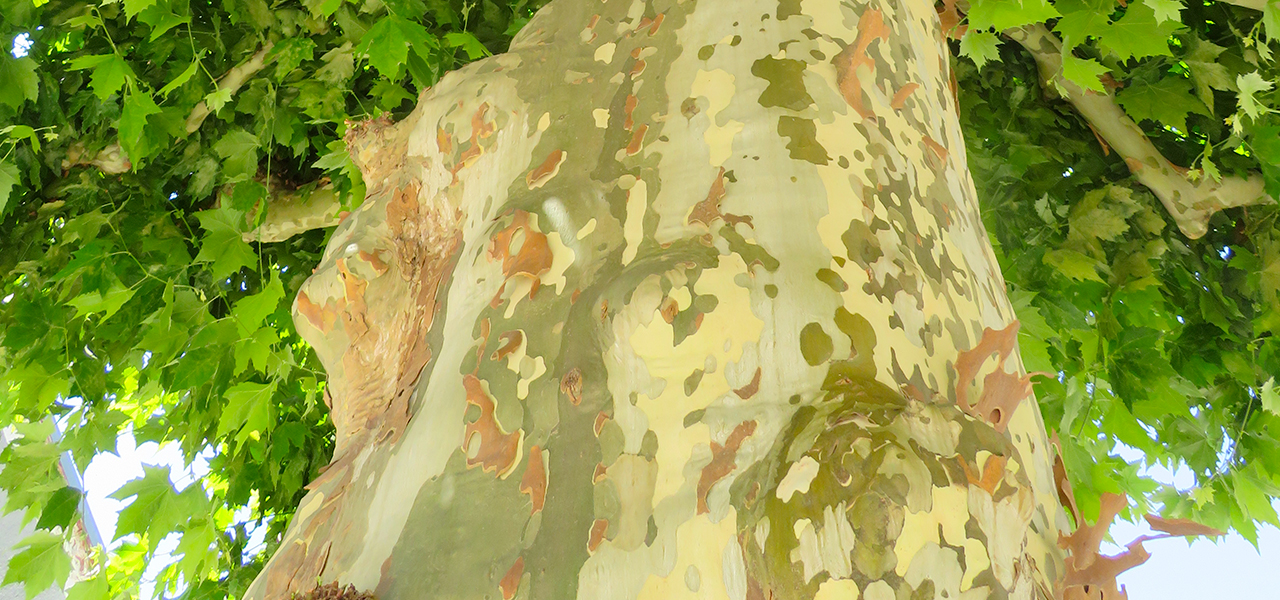
A century-old plane tree in front of a bastide, an alley of cypresses leading to the entrance, a stone pine shading the terrace. These trees are not there by chance. They were planted 50, 100, or 150 years ago to structure the landscape, provide shade, or mark a path. They are an integral part of the architecture and speak to the long-term vision of those who shaped the estate.
Orientation: Where It All Begins
A bastide is never placed at random. Its main facade faces south or southeast to capture winter light and enjoy morning sweetness in summer, all while turning its back to the Mistral. Noble rooms open to the sun; service rooms (kitchen, pantry) are to the north, where coolness is precious. This logic may seem obvious, yet how many renovations forget it? When we analyze a property for you, we start there: orientation, wind, and light. Because a “just” house dialogues with the elements; it does not fight them.
What We Look For On Your Behalf
At Beaumas, we do not sell houses as standardized products. We facilitate “recognitions.”
Recognizing a bastide is:
- Feeling that the symmetry of the facade calms the spirit.
- Understanding why solid wooden shutters keep the house cool.
- Seeing that the génoises are constructive intelligence, not just folklore.
- Sensing that a place was designed for living slowly.
Recognizing a mas is:
- Accepting that beauty lies in solidity rather than decoration.
- Feeling the weight of agricultural history and generational legacy.
- Understanding that multiple outbuildings are potential, not a problem.
Recognizing a maison de maître is:
- Sensing the memory of a family, a family, and an era.
- Seeing how it structures the village as a landmark.
- Appreciating generous volumes, high ceilings, and a staircase that tells of social ascent.
Knowing How to Read to Better Inhabit
We spend time explaining what we see because an informed choice is a right choice. Knowing that a stone vault is worth more than a false ceiling, understanding why a southeast orientation is an asset, or recognizing that a well-applied lime plaster is a heritage investment – this knowledge changes everything. It distinguishes a respectful renovation from a destructive facelift. It helps to see potential where others only see the old.
At Beaumas, we do not sell you square footage. We help you recognize the place that fits you. And that begins with knowing how to read it.
To further your project and learn to “read” your future home,
contact our team and let’s meet.
Beaumas Immobilier > Contact us